

July 2024 Summertime and the Power of Hydration on Brain Health
Monday, December 1, 2025
The Right Kind of Fluids to Support Brain Health in Persons with Dementia

Word of the Month – “Hydration” – Hydration is the body’s ability to absorb water, the vital liquid it needs, and is based on how much is available to it. Every cell, tissue, and organ requires fluid to perform functions such as maintaining temperature, disposing of waste products and lubricating joints.
credit : Healthkera
HEALTHY MINDS, HEALTHY LIVES
In order for our organs to function properly, we need to drink ½ our body weight in fluid ounces of healthy liquids daily.
Examples of healthy liquids:
- Water
- Herbal Teas
- Fruit Waters
- Clear Soups
- Milk
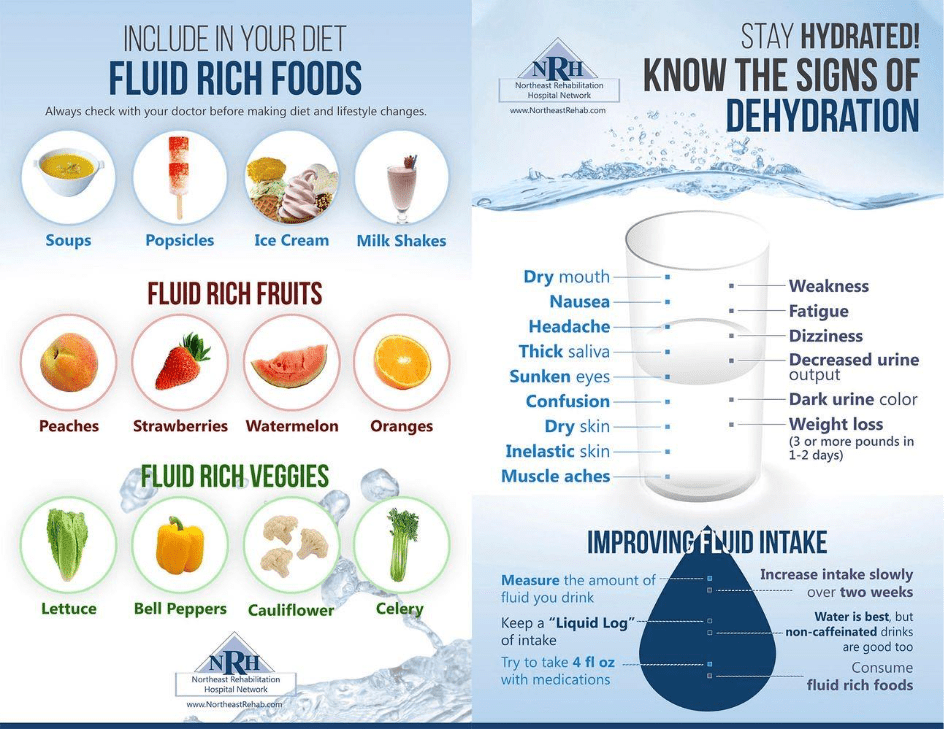
When our bodies are adequately hydrated, great things happen!
- Regulates blood pressure whereas poor hydration may cause dizziness and falls
- Promotes concentration and memory, prevents brain fog
- Aids in digestion and regular bowel movements, deters constipation
- Lubricates brain and joint tissue, thus decreasing pain
- Transports nutrients, while poor hydration results in lack of nutrient absorption
- Helps rid the body of waste, preventing toxin build-up in the body
- Flushes bacteria from the bladder; aiding in avoidance of urinary tract infections
- Oxygenates the body’s cells; as poor oxygenation may result in organ damage
- Improves muscle growth, helping to elude muscle wasting and weakness
- Increases energy and physical performance, evading low energy and fatigue
- Helps regulate body temperature and prevents overheating
Here are some tips to help you hydrate:
- Keep water readily available – carry water with you to encourage yourself to drink more
- Keep a schedule or track your intake on the calendar to make sure you’re hydrating adequately
- Include high water content foods such as melons or gelatin